
The Story of 7Sisters Farm

Where Our Puppies Begin

When Karen and I found this property, it was the setting that stopped us — open fields, mature trees, outbuildings, and the kind of quiet that lets you hear weather coming before it arrives. We knew this was where we wanted to raise dogs. The land has been farmed since 1833, when President Andrew Jackson granted it to George Akers, and the brick house that sits on it has its own story — you can read it below.

Our puppies are whelped in a dedicated nursery where one of us is always present — I sleep with the litters at night, and Karen works from home alongside them during the day. The adult dogs get supervised visits at home, but the nursery stays calm and controlled in those early weeks. We introduce new experiences gradually and deliberately, building on what the farm already provides.

And the farm provides a lot. As puppies grow and build tolerance to new experiences, their world expands outward — nursery to yard, yard to pasture, pasture to the wider property. By the time they leave us they've walked on grass, gravel, dirt, and concrete. They've heard tractors, wind through open fields, and thunderstorms rolling across the prairie. They've seen pigs and piglets, poultry, whatever wildlife wanders through, and occasionally the mayor of the neighborhood rolling by with his mules and friends. It's just life here.

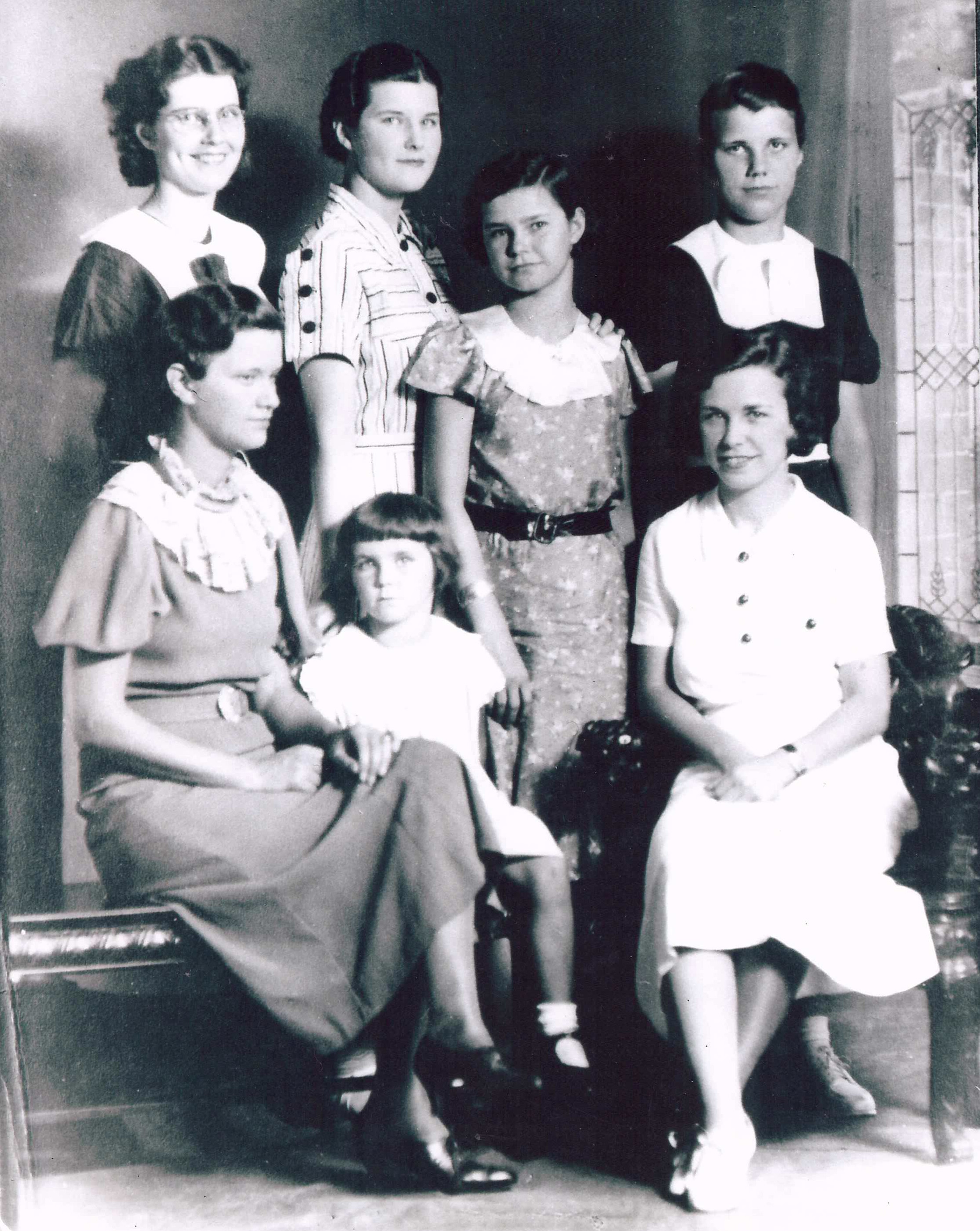
Historic photo of the seven sisters who lived in the brick house

Pictured are the seven sisters that lived in the brick house. The farm had stayed in the same family for more than 100 years until it was acquired in 2007 and further restored by Cathe Capel of Seven Sisters. Dustin and Karen were welcomed into the home in 2023, and the name of the farm was modified to 7Sisters to reflect the new stewards of the property.

A Brief History of the Brick House

by George Clark

The brick house was built by James Michael and Mahalia Ann West. It was started in 1893 and finished in 1895. James Michael West farmed something in excess of 240 acres. In addition he operated a sawmill [built in the 1830s by George Akers, remains of the mill were on the property owned by James Michael West after 1854] and a brickyard. James Michael's sawmill produced the wood used in the house. His brickyard made the bricks. He took a wagon load of lumber to Decatur to be dried and milled for the trim work. The parlor fireplace millwork is quarter sawn Sycamore. Oak and Pine trim the other rooms.

The home is all brick construction; both load bearing interior and exterior walls are multiple courses of brick, not brick veneer as is common today. When the house was first finished in 1895 it had central heat, a water system, an indoor bathroom complete with tub and commode and gas lights. When the original single pane windows were replaced with insulated double pane windows, the stained glass windows that were original to the house were reinstalled in front of the replacement windows.

James Michael and Mahalia Ann West, my great grandparents, lived in the home until their death, at which time it passed to my grandparents James Harvey ("Harv") and Ruby West. They lived in the house until James Harvey's death. Ruby West continued to live in the house, until she could no longer care for it and moved in with her mother, my mother, Mary Clark. The house was then occupied by one of Ruby's grandchildren until her death, at which time the house passed to her daughter, Mary Clark. At this time, Theresa Rogers, Mary's granddaughter, my daughter, and her family occupied the home. The home became my property after my mother's death and I passed it on to Theresa. Theresa and her family lived in the home until her death.
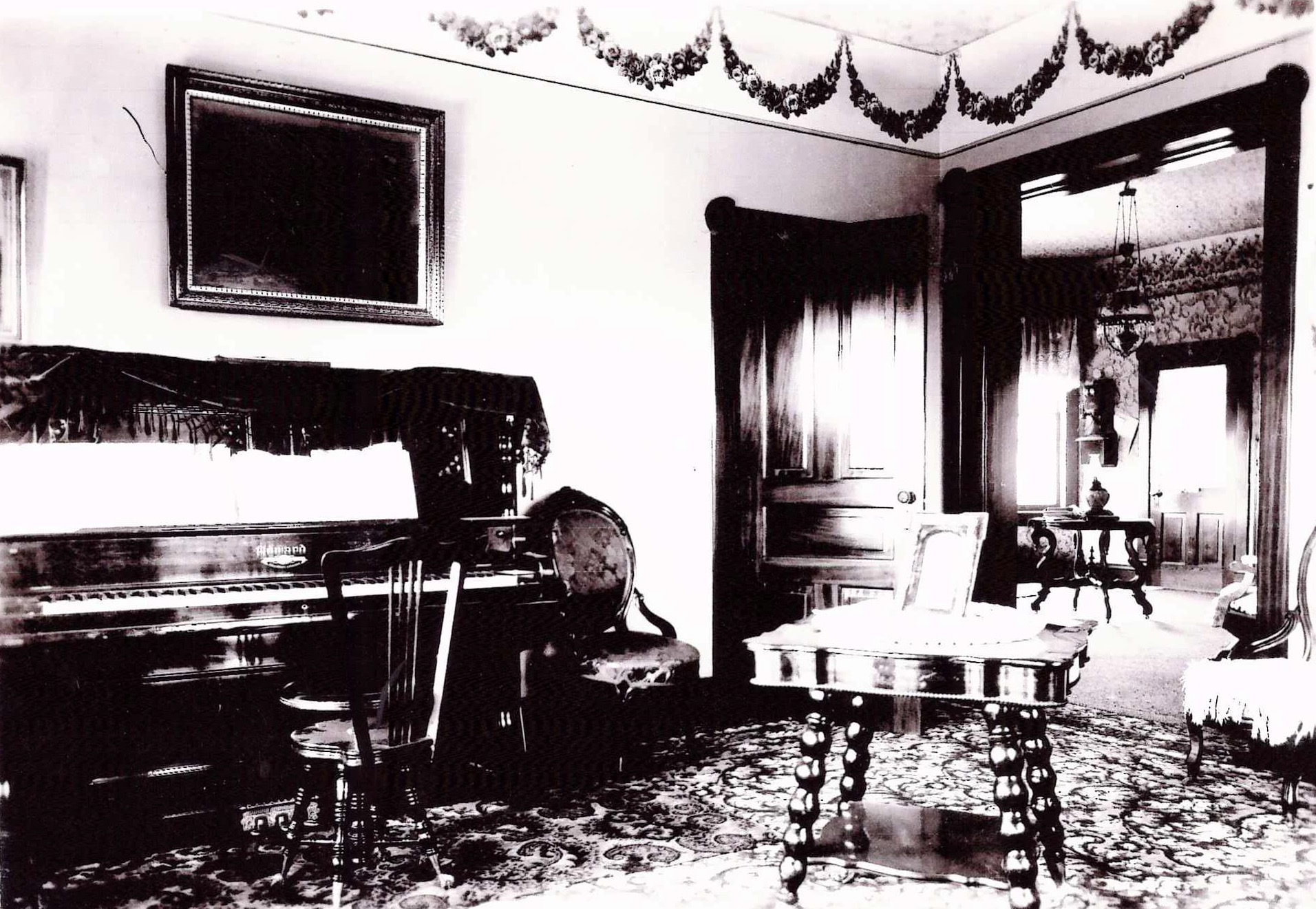
Historic parlor room featuring quarter sawn Sycamore fireplace millwork
The historic parlor room with original millwork